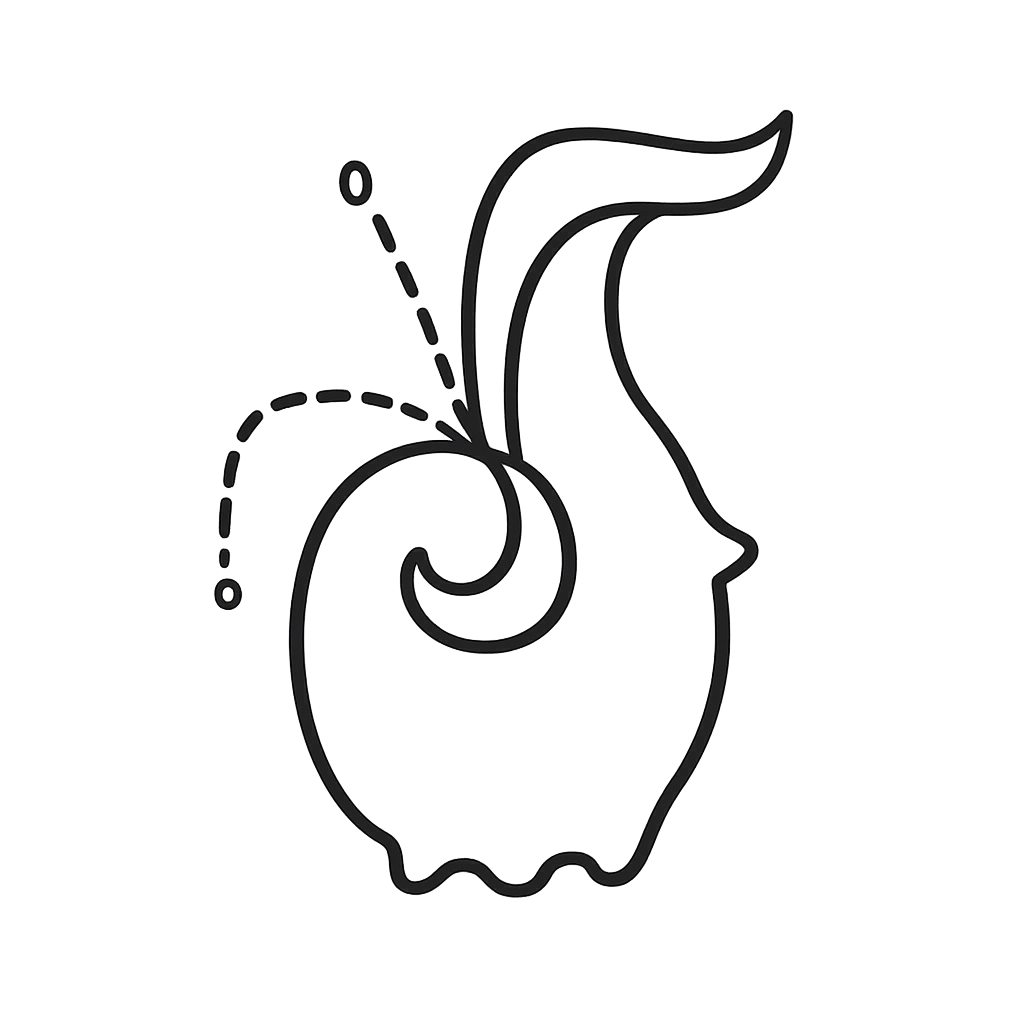
Detección de habilidades de pensamiento crítico en la resolución de problemas de estudiantes de ingeniería: El caso del esquiador de Perelman
DOI:
https://doi.org/10.31349/RevMexFisE.23.010202Keywords:
Critical thinking; Problem resolution; argumentation; puzzles; engineeringAbstract
En este estudio se analiza la forma en que estudiantes de ingeniería, quienes están iniciando el segundo semestre, resuelven el problema del esquiador, un reconocido acertijo propuesto por Yakov Perelman. La investigación se realiza sobre cuatro grupos de una Escuela Superior de Cómputo que cursaron la asignatura de física, dos de ellos con una intervención didáctica enfocada en el desarrollo del pensamiento crítico y creativo, y dos grupos control con formación tradicional. El objetivo principal es comparar el desempeño de los estudiantes en la resolución del problema e identificar si existen diferencias significativas, que evidencien un pensamiento de orden superior en los grupos expuestos a las estrategias innovadoras de desarrollo de habilidades. Los resultados obtenidos sirven para sustentar la premisa de que la introducción de métodos activos de enseñanza que fomenten el pensamiento crítico y creativo, desde los primeros semestres de la carrera, es fundamental para la formación integral de los futuros ingenieros.
This study analyzes the way in which engineering students, who are starting their second semester, solve the skier problem, a well-known puzzle proposed by Yakov Perelman. The research is carried out on four groups from a Higher School of Computing that took the physics subject, two of them with a didactic sequence focused on the development of critical and creative thinking, and two control groups with traditional training. The main objective is to compare the performance of students in solving the problem and identify if there are significant differences that evidence higher-order thinking in the groups exposed to innovative skill development strategies. The results obtained serve to support the premise that the introduction of teaching methods that encourage critical and creative thinking, from the first semesters, is essential for the comprehensive training of future engineers.
Downloads
References
B. Thornhill-Miller et al., Creativity, Critical Thinking, Communication, and Collaboration: Assessment, Certification, and Promotion of 21st Century Skills for the Future of Work and Education. J. Intell. 11 (2023) 54, https://doi.org/10.3390/jintelligence11030054
J. Pappas and E. Pappas, Creative Thinking, Creative Problem Solving, And Inventive Design In The Engineering Curriculum: A Review, In 2003 Annual Conference (ASEE Conferences, Nashville, Tennessee, 2003), https://dx.doi.org/10.18260/1-2--12614
P. A. Alexander et al., Higher order thinking and knowledge: Domain-general and domain-specific trends and future directions., In G. Schraw and D. R. Robinson, eds., Assessment of higher order thinking skills, Current perspectives on cognition, learning, and instruction. (IAP Information Age Publishing, Charlotte, NC, US, 2011) pp. 47-88
J. E. Parra Castrillón, M. J. Amariles Camacho, y C. A. Castro Castro, Aprendizaje basado en problemas en el camino a la innovación en ingeniería, Ing. USBMed. 7 (2016) 96, https://doi.org/10.21500/20275846.2486
I. Ros, I. Camino Ortiz de Barrón, and E. Z. Anta, Compromiso de los estudiantes y pensamiento crítico-creativo, Contextos de Educación 25 (2018) 67, www.hum.unrc.edu.ar/ojs/index.php/contextos
O. J. Alkhatib, A Framework for Implementing Higher-Order Thinking Skills (Problem- Solving, Critical Thinking, Creative Thinking, and Decision-Making) in Engineering & Humanities, In 2019 Advances in Science and Engineering Technology International Conferences (ASET) (2019) pp. 1-8, https://doi.org/10.1109/ICASET.2019.8714232
I. W. Kelly, Critical Thinking Education and Assessment: Can Higher Order Thinking Be Tested?, Dialogue 50 (2011) 227, https://doi.org/10.1017/S0012217311000254
L. Muñoz Salazar, M.H. Ramírez Díaz, J. Slisko, Critical thinking development in physics courses by PBL in virtual collaboration environments, IJISME. 31 (2023) 27, https://doi.org/10.30722/IJISME.31.04.003
Y.I. Perelman, Mathematics can be fun, (Mir Publishers, Moscu, URSS,1985), pp. 52-56
Z. Michalewicz, N. Falkner, and R. Sooriamurthi, Puzzle-based learning: An introduction to critical thinking and problem solving, In Proceedings of the 2010 Decision Sciences Institute Annual Meeting (2010) pp. 3101-3106, https://hdl.handle.net/2440/65402
G. P. Guevara Alban, A. E. Verdesoto Arguello, y N. E. Castro Molina, Metodologías de investigación educativa (descriptivas, experimentales, participativas, y de investigación-acción), RECIMUNDO. 4 (2020) 163, https://doi.org/10.26820/recimundo/4.(3).julio.2020.163-173
L. Pinero, L. Perozo Piñero, Ruta metodológica para avanzar en el periplo de la investigación educativa con variable compuesta o predicativa, Revista Orbis. 14 (2019) 60, https://www.revistaorbis.com/pdf/42/art7.pdf
I. Aznar, and I. Laiton, Desarrollo de Habilidades Básicas de Pensamiento Crítico en el Contexto de la Enseñanza de la Física Universitaria, Form. Univ. 10 (2017) 71, https://dx.doi.org/10.4067/S0718-50062017000100008
J. Slisko, J. L. Santana Fajardo, M. E. Rodríguez, y L. Vasquez Mercado, Acertijo de Cuatro Cubos de Perelman: Calidad de las Representaciones Visuales y Argumentación de Respuestas Verbales, Góndola Enseñ. Aprendiz. Cienc. 18 (2023) 475, https://doi.org/10.14483/23464712.20591
Febriani, J. Jumadi, and W. S. B. Dwandaru, Socio-scientific issues in physics learning to improve students’ critical thinking skills, Rev. Mex. Fis. E. 20 (2023) 010202 1, https://doi.org/10.31349/RevMexFisE.20.010202
I. Perelman, Matemática recreativa, 1a ed. (Ediciones Quinto Sol, SA, Mexico, 2001), pp.64- 65
M. I. Medina Hidalgo, Estrategias metodológicas para el desarrollo del pensamiento lógico matemático, UNESUMCiencias. 1 (2017) 73, https://revistas.ult.edu.cu/index.php/didascalia/article/view/735
G. López Aymes, Pensamiento crítico en el aula, Docencia e investigación 22 (2013) 41, https://dialnet.unirioja.es/servlet/articulo?codigo=4391695
Subsecretaría de Educación Media Superior. Rediseño del Marco Curricular Común de la Educación Media Superior 2019-2020. (SEP, México, 2023)
B. Ballestín González, and S. Fábregues Feijóo, La práctica de la investigación cualitativa en ciencias sociales y de la educación. (Editorial UOC, SL, 2018), pp. 41-48
E. Serna M, La importancia de la abstracción en la informática, Sci. Tech. 48 (2011) 122, https://moodle2.utp.edu.co/index.php/revistaciencia/article/view/125716
M. P. Jiménez, A., and J. Díaz de Bustamante, Discurso de aula y argumentación en la clase de ciencias: cuestiones teóricas y metodológicas, Enseñanza de las ciencias. 21 (2003) 359, https://doi.org/10.5565/rev/ensciencias.3914
T. Rada Crespo, O. Hernández Bustos, D. Rueda Delgado, H. Robles Noriega, and J. Miranda Crespo, Percepción del aprendizaje de la física en diferentes programas de ingeniería, Rev. Mex. Fis. E. 19 (2022) 020202 1, https://doi.org/10.31349/RevMexFisE.19.020202
G. Giménez, El problema de la generalización en los estudios de caso, Cultura y representaciones sociales 7 (2012) 40-62
M.M. Duran, 2014. El estudio de caso en la investigación cualitativa, Revista Nacional de Administración. 3 (2014) 121, https://doi.org/10.22458/rna.v3i1.477
E. R. Rodríguez Saltos, M. E. Moya Martínez, M. Rodríguez Gámez. Importancia de la empatía docente-estudiante como estrategia para el desarrollo académico, Dominio de las Ciencias 6 (2020) 23, https://dialnet.unirioja.es/servlet/articulo?codigo=7467931
P.A. Facione, N. C. Facione, and C. A. Giancarlo. The disposition toward critical thinking: Its character, measurement, and relationship to critical thinking skill. Informal logic 20 (2000) 61, https://doi.org/10.22329/il.v20i1.2254
A. M. Martín-Caraballo et al., Evaluación y Breakout, Anales de ASEPUMA 26 (2018) A108
Downloads
Published
How to Cite
Issue
Section
License
Copyright (c) 2026 Laura Muñoz Salazar, J. Slisko, M. H. Ramírez Díaz

This work is licensed under a Creative Commons Attribution-NonCommercial-NoDerivatives 4.0 International License.
Authors retain copyright and grant the Revista Mexicana de Física E right of first publication with the work simultaneously licensed under a CC BY-NC-ND 4.0 that allows others to share the work with an acknowledgement of the work's authorship and initial publication in this journal.