Optimización del mapeo de campos físicos con la adición de un sensor giratorio
DOI:
https://doi.org/10.31349/RevMexFis.72.030901Keywords:
Field mapping; continuous mapping; rotary motion sensor; measurement instruments; Hall tip; educational PhysicsAbstract
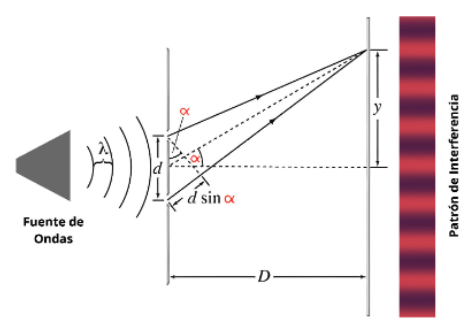
En este trabajo se propone una técnica para optimizar el mapeo de campos en la física experimental. La metodología propuesta combina instrumentos de medición convencionales con un sensor de movimiento giratorio, permitiendo la obtención de mapeos continuos con una mayor densidad de datos y una reducción en los tiempos de medición. La misma fue puesta a prueba en prácticas básicas que se realizan en los primeros años de la licenciatura en Física, tales como mapeo de campos magnéticos y caracterización de fuentes de ondas por medio de un mapeo de intensidad.
This work introduces a technique aimed at optimizing field mapping in experimental physics. The proposed methodology integrates traditional measurement instruments with a rotary motion sensor, facilitating the generation of continuous mappings with increased data density and reduced measurement times. The effectiveness of this approach was evaluated through practical experiments typically conducted in the initial stages of a Physics degree, including magnetic field mapping and the characterization of wave sources through intensity mapping.
Downloads
References
Comisión de Carrera Licenciatura Astronomía (UdelaR), Programa de Taller 2 (2020), URL https://hdl.handle.net/20.500.12008/26978, Plan 2016, Plan 2007, Plan 2019, Plan 2011
Comisión de Carrera en Física (UdelaR), Programa de Laboratorio 3 (2020) https://hdl.handle.net/20.500.12008/27150, Plan 2019
S. Törnkvist, K.-A. Pettersson, and G. Tranströmer, Confusion by representation: On student’s comprehension of the electric field concept, Am. J. Phys. 61 (1993) 335, https://doi.org/10.1119/1.17265 DOI: https://doi.org/10.1119/1.17265
E. Campos et al., El papel de la utilización de representaciones de los conceptos en las dificultades de su comprensión: el caso del campo eléctrico, Rev. Bras. Ensino Fís. 44 (2022), https://doi.org/10.1590/1806-9126-RBEF-2022-0146 DOI: https://doi.org/10.1590/1806-9126-rbef-2022-0146
C. P. Mejía Villagrán, El marco de la enseñanza para la comprensión aplicado al aprendizaje del concepto de campo eléctrico en estudiantes de ingeniería de sistemas, Ph.D. thesis (2011), https://repositorio.unal.edu.co/handle/unal/7911
I. Vernier, Rotary Motion Sensor User Manual (2018), https://www.vernier.com/manuals/rmv-btd/
V. S. Technology, Vernier LabPro User’s Manual (2013), https://www.vernier.com/files/manuals/labpro.pdf
PASCO, Microwave Optics Experiment Guide-WA-9316A, PASCO scientific, 10101 Foothills Blvd. Roseville, CA 95747- 7100
T. Young, II. The Bakerian Lecture. On the Theory of Light and Colours, Philos. Trans. R. Soc. London (1802) 12, https://doi.org/10.1098/rstl.1802.0004 DOI: https://doi.org/10.1098/rstl.1802.0004
F. A. Jenkins and H. E. White, Fundamentals of Optics, Indian J. Phys. 25 (1957)
C. O. Tabeling P., Burkhart S. and W. H., Experimental Study of Freely Decaying Two-Dimensional Turbulence. Phys. Rev. Lett., 67 (1991) 3772, https://doi.org/10.1103/PhysRevLett.67.3772 DOI: https://doi.org/10.1103/PhysRevLett.67.3772
K. V. A. Dolzhanskii F. V. and M. D. Yu., An Advanced Experimental Investigation of Quasi-Two-Dimensional Shear Flows. J. Fluid Mech. 241 (1992) 705, https://doi.org/10.1017/S0022112092002209 DOI: https://doi.org/10.1017/S0022112092002209
M. D. Cardoso O. and T. P., Quantitative Experimental Study of the Free Decay of Quasi-Two-Dimensional Turbulence. Phys. Rev. E 49 (1994) 454, https://doi.org/10.1103/PhysRevE.49.454 DOI: https://doi.org/10.1103/PhysRevE.49.454
Downloads
Published
How to Cite
Issue
Section
License
Copyright (c) 2026 M. Flores, B. Melissari

This work is licensed under a Creative Commons Attribution-NonCommercial-NoDerivatives 4.0 International License.
Authors retain copyright and grant the Revista Mexicana de Física right of first publication with the work simultaneously licensed under a CC BY-NC-ND 4.0 that allows others to share the work with an acknowledgement of the work's authorship and initial publication in this journal.