Studying the properties of prepared kaolin/epoxy nanocomposites for flame retardancy
DOI:
https://doi.org/10.31349/RevMexFis.72.061003Keywords:
Flame Retardant, flammability properties, kaolin, limiting oxygen index, rate of burningAbstract
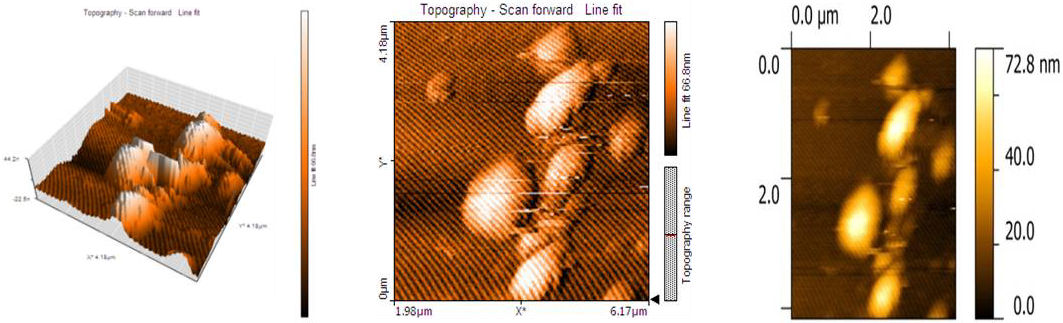
Numerous everyday goods, including fabrics, electrical appliances, vehicles, and airplanes, are currently undergoing extensive testing and inspection for their flammability features. By lowering the total fire risk associated with the use of highly flammable raw materials in goods such as textiles, apparel, composites, and plastics, flame retardants perform a critical protective role in preserving lives and property. In this study, kaolin and epoxy were used to prepare a nanocomposite flame retardant. The used kaolin was tested by X-ray diffraction and (AFM) tests. The results showed that the powders possess multi-phases and also have a mean grain size of (38 nm) and root mean square (RMS) of (12.25). Also, the energy dispersive (XRD) spectroscopy analysis (EDX) showed that the presence of the essential elements of these powders was accurate and clear. The nanocomposites were prepared by mixing the kaolin nanopowder with the epoxy resin by weight percentages of (2, 4, 6, 8 and 10%). To determine the efficiency of these additives in flame retardant and to increase the combustion resistance of epoxy resin, different methods of measurement were used according to ASTM; average time of burning, average extent of burning, rate of burning, limiting oxygen index, maximum flame height and residue percentage succeeding combustion. Based flame retardant is commercially successful and they are more environmentally friendly as compared to halogenated and non-halogenated inorganic or organic types and they are being applied suitably with a cross-inker and/or binder copolymer that makes the FRs more resistant to common weathering conditions and exposures. They also produce less or no obnoxious gases while burning.
Downloads
References
Y. Wang, T. Henriksen, M. Deo, and R. A. Mentzer, Factors contributing to US chemical plant process safety incidents from 2010 to 2020, J. Loss Prev. Process Ind. 71 (2021) 104512 DOI: https://doi.org/10.1016/j.jlp.2021.104512
S. S. Abdullah and F. L. Ahmed, Structural and optical studies on sliver nitrate doped polymer blend and effect on some pathogenic bacteria, Rev. Mex. Fis. 71 (2025) 041004 DOI: https://doi.org/10.31349/RevMexFis.71.041004
S. Sonkaria and H. J. Kim, Nanoscale configuration of clayinterlayer chemistry: A precursor to enhancing flame retardant properties, IntechOpen (2021) 75385 DOI: https://doi.org/10.5772/intechopen.95788
T. Y. Sabri, S. K. Jasim, A. A. Habeeb, and A. S. Jasim, Preparation and Study Ag Nanoparticles via PLAL Technique: Influence of Different Number of Pulses, Int. J. Nanoelectron. Mater. 17 (2024) 45 DOI: https://doi.org/10.58915/ijneam.v17i1.458
S. K. Jasim, A. M. Shano, and S. K. Adnan, Zinc Oxide Poly Crystals Heterojunction and Infrared-Blind UV-Photodetector, J. Nano- Electron. Phys. 16 (2024) 01012 DOI: https://doi.org/10.21272/jnep.16(1).01012
K. Zheng, F. Zheng, J. Lin, Z. Ren, and Y. Lin, Utilization of red mud as copper substitute in eco-friendly resinbased brake composites: Performance evaluation and machine learning prediction, Tribol. Int. 214 (2026) 111324 DOI: https://doi.org/10.1016/j.triboint.2025.111324
N. Abu-Thabit et al., Preparation of pH-Indicative and FlameRetardant Nanocomposite Films for Smart Packaging Applications, Sensors 20 (2020) 5462 DOI: https://doi.org/10.3390/s20195462
S. K. Jasim, W. M. W. A. Kamil, A. A. Habeeb, and E. Ali, Effect of Cinnamon Nano/Micro Particles at Antibacterial Activity, J. Phys. Sci. 36 (2025) 43 DOI: https://doi.org/10.21315/jps2025.36.3.4
G. Jin et al., A novel coarse-grained discrete element method for simulating failure process of strongly bonded particle materials, Powder Technol. 464 (2025) 121212 DOI: https://doi.org/10.1016/j.powtec.2025.121212
S. K. Jasim, S. M. A. Al Hussan, and M. T. Abd, Improving the Mechanical Properties of Dental Fillings by Adding TiO2 NPs Prepared Laser Ablation, Bio. Nano. Science 15 (2025) 330 DOI: https://doi.org/10.1007/s12668-025-01970-y
S. K. Jasim, S. M. A. A. Hussan, A. S. Noori, and A. A. Habeb, Determine surface plasmon resonance and effect parameters laser ablation on Cu and Zn nanoparticles, AIP Conf. Proc. 3219 (2024) 060008 DOI: https://doi.org/10.1063/5.0236469
X. Li and Ma, Z., Inherent anisotropy of aeolian sand with different bedding angles in true-triaxial tests, Eng. Geol. 356 (2025) 108272 DOI: https://doi.org/10.1016/j.enggeo.2025.108272
F. Xu et al., Novel high-efficiency casein-based P-N-containing flame retardants with multiple reactive groups for cotton fabrics, ACS Sustainable Chem. Eng. 7 (2019) 13999 DOI: https://doi.org/10.1021/acssuschemeng.9b02474
B. M. Dheyaa, W. H. Jassim, and N. A. Hameed, Evaluation of the epoxy/antimony trioxide nanocomposites as flame retardant, J. Phys. Conf. Ser. 1003 (2018) 012078 DOI: https://doi.org/10.1088/1742-6596/1003/1/012078
L. Su, X. Zeng, H. He, Q. Tao, and S. Komarneni, Preparation of functionalized kaolinite/epoxy resin nanocomposites with enhanced thermal properties, Appl. Clay Sci. 148 (2017) 103 DOI: https://doi.org/10.1016/j.clay.2017.08.017
Z. Luo et al., Synergistic enhancement of heat resistance and mechanical performance of epoxy resin by introducing entanglement effect, Composites Part A 203 (2026) 109581 DOI: https://doi.org/10.1016/j.compositesa.2026.109581
S. A. Zaidan and M. H. Omar, The effects of bauxite, metakaolin, and porosity on the thermal properties of prepared Iraqi clays refractory mortars, Appl. Phys. A 124 (2018) 386 DOI: https://doi.org/10.1007/s00339-018-1759-2
C. Liu et al., Phosphorous-Nitrogen Modification of Epoxy Grafted Poly-Acrylic Resin: Synergistic Flame Retardment Effect, Polymers 13 (2021) 2826 DOI: https://doi.org/10.3390/polym13162826
X. S. Wang, G. L. Xu, Y. Wang, Y. Liang, and J. Hu, Preparation of phosphorus-containing poly-acrylate resins and their flame resistant properties, J. Chem. Eng. Chin. Univ. 31 (2017) 186
A. H. Ahmed, A. S. Jasima, and S. K. Jasim, Synthesis of Gold Nanoparticles by Pulsed Laser Ablation and its Study Physical and Mechanical Properties, Int. J. Nanoelectron. Mater. 17 (2024) 1465 DOI: https://doi.org/10.58915/ijneam.v17i4.1465
N. R. Kopparthi, J. Schuster, and Y. P. Shaik, Fabrication and Characterization of Bamboo-Epoxy Reinforced Composite for Thermal Insulation, Open J. Compos. Mater. 14 (2023) 15 DOI: https://doi.org/10.4236/ojcm.2024.141002
H. Ma et al., Multifunctional Graphite Nanosheet-Hydrophilic Epoxy Anticorrosion Coatings via Size Confinement of Exfoliated Graphite, Polymers 17 (2025) 1803 DOI: https://doi.org/10.3390/polym17131803
C. Yan et al., Additive manufacturing of hydroxyapatite and its composite materials: A review, J. Micromech. Mol. Phys. 5 (2020) 2030002 DOI: https://doi.org/10.1142/S2424913020300029
F. Heidari, M. Razavi, M. A. A. Zamani, M. Tahriri, and L. Tayebi, A comparison between the properties of natural hydroxyapatite produced by cold isostatic pressing and spark plasma sintering techniques, J. Aust. Ceram. Soc. 54 (2018) 337 DOI: https://doi.org/10.1007/s41779-017-0158-z
Y. Zheng and B. A. Baudet, Pore structure response of reconstituted kaolin and illite-smectite mixed-layer rich clay to 1D compression, Appl. Clay Sci. 276 (2025) 107892 DOI: https://doi.org/10.1016/j.clay.2025.107892
M. Altaf, M. N. Ahmed, A. Iqbal, and A. A. Khan, Synthesis and characterization of novel organoclay-epoxy based flame retardant nanocomposites, J. Reinf. Plast. Compos. 45 (2026) 32 DOI: https://doi.org/10.1177/07316844241272956
Downloads
Published
How to Cite
Issue
Section
License
Copyright (c) 2026 Saif Khalel Jasim, Mohamad T. Abd, Imad N. Kashkool

This work is licensed under a Creative Commons Attribution-NonCommercial-NoDerivatives 4.0 International License.
Authors retain copyright and grant the Revista Mexicana de Física right of first publication with the work simultaneously licensed under a CC BY-NC-ND 4.0 that allows others to share the work with an acknowledgement of the work's authorship and initial publication in this journal.