
The pH effect on PEDOT: PSS/GO as a potential hole transport layer
DOI:
https://doi.org/10.31349/RevMexFis.72.061004Keywords:
Polymer, Graphene oxide, acidic, basic, characterization, propertiesAbstract
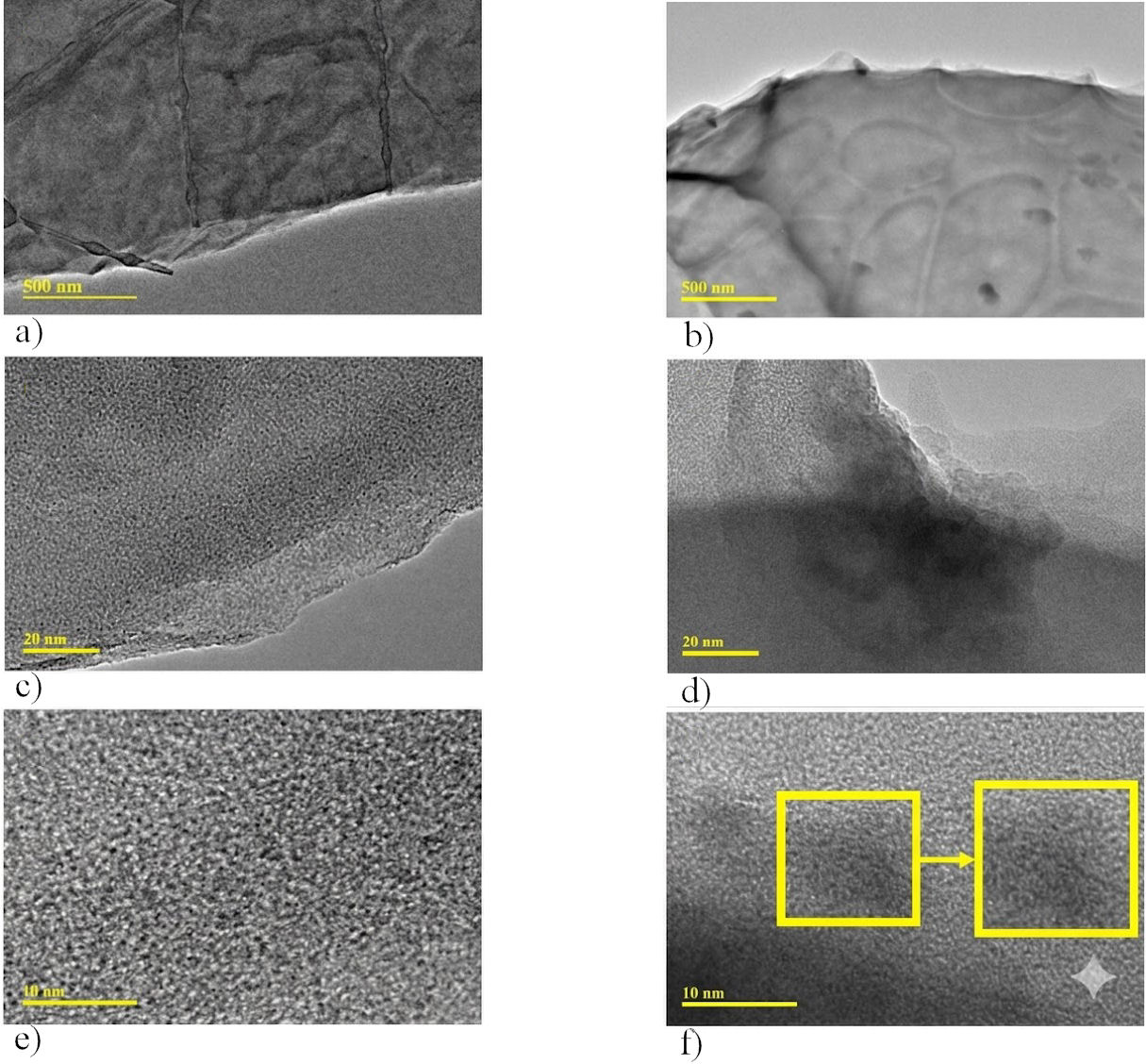
Poly(3,4-ethylenedioxythiophene)-polystyrenesulfonate (PEDOT: PSS) with secondary doping has been widely researched as a hole transport layer in solar cells because secondary doping can provide conformational change and improve the properties of PEDOT: PSS. PEDOT: PSS is doped with graphene oxide (GO) to form PEDOT: PSS/GO solution, and then, sodium hydroxide is added into the acidic PEDOT: PSS/GO solution. The novelty of this work relies on the pH effect of PEDOT: PSS/GO, which shows basic condition allows better dispersity of GO in water. The HRTEM result indicates the formation of PEDOT: GO. Besides, the two-point probe results show that both acidic and basic PEDOT: PSS/GO is more conductive than PEDOT: PSS and GO alone. This was due to the transformation of benzoid structure to quinoid structure which has been supported by the lower d-spacings of acidic PEDOT: PSS/GO (3.48 Å) and basic PEDOT: PSS/GO (3.44 Å) compared to PEDOT: PSS (3.56 Å) in the XRD result. Other than that, the UV-Vis absorbance result shows that the PSS chain absorbance peak in basic PEDOT: PSS/GO is around 13% lower than that in acidic PEDOT: GO, indicating better replacement of insulating PSS chain and more successful formation of PEDOT: GO. In the EDX results, the basic PEDOT: PSS/GO shows higher oxygen content (93.34%) than acidic PEDOT: PSS/GO (44.58%) due to the increase of hydroxyl groups of GO in basic conditions caused by NaOH. Besides, the average resistance values of the basic PEDOT: PSS/GO and acidic PEDOT: PSS/GO layers are 3.72E+10 Ω and 1.30E+10 Ω, respectively. The Na+ ion in NaOH resulted in the damages of unreacted PEDOT: PSS, making the basic PEDOT: PSS/GO sample more electrically resistant than the acidic PEDOT: PSS/GO sample. Despite some of the adverse effects of basic PEDOT: GO, it shows the lowest surface roughness (Rq: 2.52 nm) among all potential HTLs investigated, indicating the best deposition on glass and wettability for organic semiconductors (OSCs) which can be applied as a counter electrode in dye-sensitized solar cell (DSSC) application.
Downloads
References
S. Katoon et al., Perovskite solar cell’s efficiency, stability and scalability: A review, Materials Science for Energy Technologies 6 (2023) 437 DOI: https://doi.org/10.1016/j.mset.2023.04.007
H. Xu et al., Hole transport layers for organic solar cells: recent progress and prospects, Journal of Materials Chemistry A 8 (2020) 11478 DOI: https://doi.org/10.1039/D0TA03511D
S. Li et al., A brief review of hole transporting materials commonly used in perovskite solar cells, Rare Metals 40 (2021) 2712 DOI: https://doi.org/10.1007/s12598-020-01691-z
J.C. Yu et al., Highly efficient and stable inverted perovskite solar cell employing PEDOT:GO composite layer as a hole transport layer, Scientific Reports 8 (2018) 1070 DOI: https://doi.org/10.1038/s41598-018-19612-7
Y. Wang et al., High-performance hole transport layer based on WS2 doped PEDOT: PSS for organic solar cells, Organic Electronics 99 (2021) 106305 DOI: https://doi.org/10.1016/j.orgel.2021.106305
S. Ozcan et al., Graphene oxide-doped PEDOT: PSS as hole transport layer in inverted bulk heterojunction solar cell, Journal of Materials Science: Materials in Electronics 31 (2020) 3576 DOI: https://doi.org/10.1007/s10854-020-02906-w
W. Li et al., Boost the performance of inverted perovskite solar cells with PEDOT: PSS/Graphene quantum dots composite hole transporting layer, Organic Electronics 78 (2020) 105575 DOI: https://doi.org/10.1016/j.orgel.2019.105575
C. Redondo-Obispo et al., Enhanced stability and efficiency in inverted perovskite solar cells through graphene doping of PEDOT: PSS hole transport layer, Materials & Design 191 (2020) 108587 DOI: https://doi.org/10.1016/j.matdes.2020.108587
D.-Y. Lee, S.-I. Na, and S.-S. Kim, Graphene oxide/PEDOT: PSS composite hole transport layer for efficient and stable planar heterojunction perovskite solar cells, Nanoscale 8 (2016) 1513 DOI: https://doi.org/10.1039/C5NR05271H
J. Niu et al., Graphene-oxide doped PEDOT: PSS as a superior hole transport material for high-efficiency perovskite solar cell, Organic Electronics 48 (2017) 165 DOI: https://doi.org/10.1016/j.orgel.2017.05.044
A. Giuri et al., UV Reduced Graphene Oxide PEDOT: PSS Nanocomposite for Perovskite Solar Cells, IEEE Transactions on Nanotechnology 15 (2016) 725 DOI: https://doi.org/10.1109/TNANO.2016.2524689
S. Wang et al., Hybrid UV-Ozone-Treated rGO-PEDOT: PSS as an Efficient Hole Transport Material in Inverted Planar Perovskite Solar Cells, Nanoscale Research Letters 12 (2017) 619 DOI: https://doi.org/10.1186/s11671-017-2393-1
X. Huang et al., Moderately reduced graphene oxide/PEDOT: PSS as hole transport layer to fabricate efficient perovskite hybrid solar cells, Organic Electronics 39 (2016) 288 DOI: https://doi.org/10.1016/j.orgel.2016.10.013
X.-Y. Li et al., The solvent treatment effect of the PEDOT: PSS anode interlayer in inverted planar perovskite solar cells, RSC Advances 6 (2016) 24501 DOI: https://doi.org/10.1039/C5RA25787E
C. Peng, M.N. Chan, and C.K. Chan, The Hygroscopic Properties of Dicarboxylic and Multifunctional Acids: Measurements and UNIFAC Predictions, Environmental Science & Technology 35 (2001) 4495 DOI: https://doi.org/10.1021/es0107531
R. Tariq Ahmedhamdi et al., Humidity impact on photovoltaic cells performance: A review, 35 (2018
Q. Wang et al., Modulation of PEDOT: PSS pH for Efficient Inverted Perovskite Solar Cells with Reduced Potential Loss and Enhanced Stability, ACS Applied Materials & Interfaces 8 (2016) 32068 DOI: https://doi.org/10.1021/acsami.6b11757
F.J. Lim et al., Influence of a novel fluorosurfactant modified PEDOT: PSS hole transport layer on the performance of inverted organic solar cells, Journal of Materials Chemistry 22 (2012) 25057 DOI: https://doi.org/10.1039/c2jm35646e
H. Luo et al., Efficient and Air-Stable Planar Perovskite Solar Cells Formed on Graphene-Oxide-Modified PEDOT: PSS Hole Transport Layer, Nano-Micro Letters 9 (2017) 39 DOI: https://doi.org/10.1007/s40820-017-0140-x
C.-J. Shih et al., Understanding the pH-Dependent Behavior of Graphene Oxide Aqueous Solutions: A Comparative Experimental and Molecular Dynamics Simulation Study, Langmuir 28 (2012) 235 DOI: https://doi.org/10.1021/la203607w
J.L. Suter and P.V. Coveney, Principles governing control of aggregation and dispersion of aqueous graphene oxide, Scientific Reports 11 (2021) 22460 DOI: https://doi.org/10.1038/s41598-021-01626-3
E.H. Sujiono et al., Graphene oxide based coconut shell waste: synthesis by modified Hummers method and characterization, Heliyon 6 (2020) e04568 DOI: https://doi.org/10.1016/j.heliyon.2020.e04568
J.C. Yu et al., Highly Efficient Polymer-Based Optoelectronic Devices Using PEDOT: PSS and a GO Composite Layer as a Hole Transport Layer, ACS Applied Materials & Interfaces 6 (2014) 2067 DOI: https://doi.org/10.1021/am4051487
T.F. Emiru and D.W. Ayele, Controlled synthesis, characterization and reduction of graphene oxide: A convenient method for large scale production, Egyptian Journal of Basic and Applied Sciences 4 (2017) 74 DOI: https://doi.org/10.1016/j.ejbas.2016.11.002
V.B. Mbayachi et al., Graphene synthesis, characterization and its applications: A review, Results in Chemistry 3 (2021) 100163 DOI: https://doi.org/10.1016/j.rechem.2021.100163
Y. Xia, K. Sun, and J. Ouyang, Highly conductive poly(3,4- ethylenedioxythiophene):poly(styrene sulfonate) films treated with an amphiphilic fluoro compound as the transparent electrode of polymer solar cells, Energy & Environmental Science 5 (2012) 5325 DOI: https://doi.org/10.1039/C1EE02475B
F.-P. Du et al., PEDOT: PSS/graphene quantum dots films with enhanced thermoelectric properties via strong interfacial interaction and phase separation, Scientific Reports 8 (2018) 6441 DOI: https://doi.org/10.1038/s41598-018-24632-4
T.-C. Tsai et al., A facile dedoping approach for effectively tuning thermoelectricity and acidity of PEDOT: PSS films, Organic Electronics 15 (2014) 641 DOI: https://doi.org/10.1016/j.orgel.2013.12.023
F. Abd-Wahab, H.F. Abdul Guthoos, and W.W.A. Wan Salim, Solid-State rGO-PEDOT: PSS Transducing Material for CostEffective Enzymatic Sensing, Biosensors 9 (2019) 6 DOI: https://doi.org/10.3390/bios9010036
G. Surekha et al., FTIR, Raman and XRD analysis of graphene oxide films prepared by modified Hummers method, Journal of Physics: Conference Series 1495 (2020) 012012 DOI: https://doi.org/10.1088/1742-6596/1495/1/012012
N.G. de Barros et al., Graphene Oxide: A Comparison of Reduction Methods, C 9 (2023) 73 DOI: https://doi.org/10.3390/c9030073
S.B. Singh and S.A. Dastgheib, Physicochemical transformation of graphene oxide during heat treatment at 110-200◦ , Carbon Trends 10 (2023) 100251 DOI: https://doi.org/10.1016/j.cartre.2023.100251
X. Wang et al., Enhancement of thermoelectric performance of PEDOT: PSS films by post-treatment with a superacid, RSC Advances 8 (2018) 18334 DOI: https://doi.org/10.1039/C8RA02058B
R.K. Sharma et al., Graphene oxide modified PEDOT: PSS as an efficient hole transport layer for enhanced performance of hybrid silicon solar cells, Surfaces and Interfaces 36 (2023) 102577 DOI: https://doi.org/10.1016/j.surfin.2022.102577
B. Piro et al., Fabrication and Use of Organic Electrochemical Transistors for Sensing of Metabolites in Aqueous Media, Applied Sciences 8 (2018) 928 DOI: https://doi.org/10.3390/app8060928
J. Ouyang et al., On the mechanism of conductivity enhancement in poly(3,4-ethylenedioxythiophene):poly(styrene sulfonate) film through solvent treatment, Polymer 45 (2004) 8443 DOI: https://doi.org/10.1016/j.polymer.2004.10.001
D. Lee and J. Seo, Three-dimensionally networked graphene hydroxide with giant pores and its application in supercapacitors, Scientific Reports 4 (2014) 7419 DOI: https://doi.org/10.1038/srep07419
V.V. Neklyudov et al., New insights into the solubility of graphene oxide in water and alcohols, Physical Chemistry Chemical Physics 19 (2017) 17000 DOI: https://doi.org/10.1039/C7CP02303K
J. Eun Song et al., A Thin In2S3 Interfacial Layer for Reducing Defects and Roughness of Cu2ZnSn(S,Se)4 Thin-Film Solar Cells, Chem.Sus.Chem. 15 (2022) e202102350 DOI: https://doi.org/10.1002/cssc.202102350
T. Tene et al., Optical properties of graphene oxide, Frontiers in Chemistry 11 (2023) 1152865 DOI: https://doi.org/10.3389/fchem.2023.1214072
T. Kim et al., Highly conductive PEDOT: PSS with enhanced chemical stability, Organic Electronics 74 (2019) 77 DOI: https://doi.org/10.1016/j.orgel.2019.06.033
S.A. Umoren, M.M. Solomon, and V.S. Saji, Chapter 19 - Conducting polymers, in Polymeric Materials in Corrosion Inhibition, S.A. Umoren, M.M. Solomon, and V.S. Saji, Editors. 2022 (2022) 443 DOI: https://doi.org/10.1016/B978-0-12-823854-7.00002-3
G. Skorupskii et al., Electrical conductivity through π–π stacking in a two-dimensional porous gallium catecholate metal– organic framework, Annals of the New York Academy of Sciences 1518 (2022) 226 DOI: https://doi.org/10.1111/nyas.14906
B. Sun et al., Electron Transfer Facilitated by π–π Stacking during the Nitrobenzene Recognition Process of an MOF Sensor, The Journal of Physical Chemistry C 125 (2021) 12433 DOI: https://doi.org/10.1021/acs.jpcc.1c02942
S.H. Kim, Control of the Charge Carrier Concentration and Hall Mobility in PEDOT: PSS Thermoelectric Films, Bulletin of the Korean Chemical Society 38 (2017) 1460 DOI: https://doi.org/10.1002/bkcs.11327
Downloads
Published
How to Cite
Issue
Section
License
Copyright (c) 2026 M. D. Nurhafizah, Tan You Zi, B. Afzalina

This work is licensed under a Creative Commons Attribution-NonCommercial-NoDerivatives 4.0 International License.
Authors retain copyright and grant the Revista Mexicana de Física right of first publication with the work simultaneously licensed under a CC BY-NC-ND 4.0 that allows others to share the work with an acknowledgement of the work's authorship and initial publication in this journal.